Improve Low Sperm Count Naturally with Ayurveda
Quick answer: Can low sperm count be improved naturally? Often, yes. Many men improve sperm count and quality over about 2 to 3 months by improving diet, sleep, and stress, and by using Ayurvedic herbs such as Ashwagandha and Shilajit under guidance. These changes work best alongside medical evaluation, since some causes of low sperm count need specific treatment.
Infertility is no longer just a “women’s issue.” Today, male infertility contributes to nearly 40–50% of infertility cases worldwide. One of the most common reasons is low sperm count, also called oligospermia. Many men silently struggle with it, often feeling stressed, embarrassed, or hopeless.
But here’s the good news: Ayurveda has long emphasised male reproductive health and uses a holistic approach focused on overall wellness, lifestyle balance, and reproductive support.
As an Ayurvedic doctor, I often remind patients that fertility is not just about sperm numbers. It reflects the overall health of the body, mind, digestion, sleep, hormones, and lifestyle. Modern science now supports many Ayurvedic principles, especially around stress management, antioxidant-rich herbs, nutrition, and reproductive wellness.
Let’s understand how Ayurveda looks at low sperm count and what natural steps may help improve male fertility.
What Exactly Is Low Sperm Count?
A sperm count below 15 million sperm per millilitre is generally considered low according to the World Health Organization (WHO). However, fertility is not determined by sperm count alone. Other important factors include:
- Sperm motility (movement)
- Sperm morphology (shape)
- Semen volume
- Hormonal balance
- Sexual health
- Stress levels
Many men with mild fertility issues can still conceive naturally with the right support and consistent lifestyle changes.
Why Is Male Fertility Declining Today?
Modern lifestyle has dramatically affected reproductive health. Some of the most common contributing factors include:
- Chronic stress and anxiety
- Poor sleep patterns
- Smoking and alcohol
- Excessive screen exposure and a sedentary lifestyle
- Processed food and nutritional deficiencies
- Obesity and insulin resistance
- Environmental toxins and pollution
- Excess heat exposure around the groin area
Even daily habits like skipping meals, sleeping late, overworking, and prolonged mental stress can gradually weaken reproductive health over time.
How Does Ayurveda View Male Fertility?
In Ayurveda, reproductive tissue is known as Shukra Dhatu. It is considered the most refined tissue in the body, formed through proper nourishment and healthy metabolism.
When digestion (Agni) becomes weak, toxins (Ama) accumulate in the body, affecting hormone balance, energy levels, and reproductive function. Ayurveda believes healthy fertility depends on strong digestion, proper sleep, balanced doshas, a calm mental state, nutritious food, healthy circulation, and good vitality (Ojas).
Excessive stress, overexertion, poor diet, and lack of rest can gradually deplete Shukra Dhatu.
What Are the Symptoms of Low Sperm Count?
Low sperm count itself often has no obvious symptoms, but many men notice related signs such as:
- Fatigue and low energy
- Reduced libido
- Mental stress
- Poor stamina
- Sleep disturbances
- Weight gain or obesity
- Low confidence and irritability
Ayurveda focuses on improving the overall system rather than targeting sperm count alone.
Which Ayurvedic Herbs Help with Low Sperm Count?
Ayurveda describes several rejuvenating herbs known as Vrishya and Rasayana herbs that support reproductive health and vitality.
1. Ashwagandha
Ashwagandha is one of the most respected herbs in Ayurveda for male reproductive wellness. Research suggests it may help improve sperm concentration, enhance sperm motility, support testosterone levels, and reduce stress and cortisol. Since stress plays a major role in hormonal imbalance, its adaptogenic properties make it particularly valuable in modern fertility concerns.
2. Shilajit
Purified Shilajit is traditionally used to improve vitality, stamina, and reproductive strength. A clinical study in oligospermic men reported positive effects on total sperm count, testosterone levels, and energy and endurance.
3. Kaunch Beej
Kaunch Beej has been traditionally used for improving semen quality and reproductive function. It is also known for supporting nervous system health.
4. Safed Musli
Safed Musli is considered a nourishing herb that supports physical strength, vitality, and reproductive health.
5. Gokshura
Gokshura is commonly used to support urinary and reproductive wellness and may help maintain hormonal balance.
| Herb | Traditionally used to support |
|---|---|
| Ashwagandha | Sperm concentration, motility, testosterone, stress |
| Shilajit | Sperm count, testosterone, stamina |
| Kaunch Beej | Semen quality, nervous system health |
| Safed Musli | Strength, vitality, reproductive health |
| Gokshura | Urinary and reproductive wellness, hormonal balance |
Which Foods Support Sperm Health?
A few simple, nourishing foods may help support sperm health:
- Dates and figs
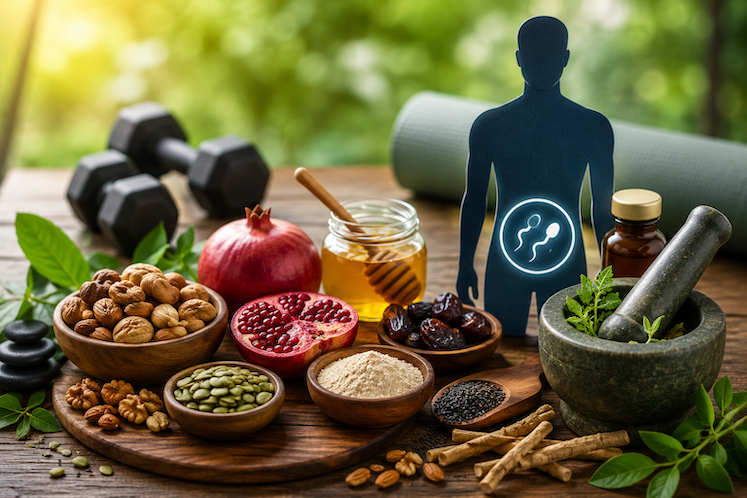
- Seeds and nuts: soaked almonds and walnuts, pumpkin seeds, black sesame seeds
- Mung dal
- Pomegranate
- Amla
Healthy fats, zinc, antioxidants, and protein-rich foods are especially important, because sperm cells are highly vulnerable to oxidative stress.
For a full day-by-day approach, see our male fertility diet plan, or get a personalised plan in the MyAyur app.
How Do Yoga and Stress Reduction Help Male Fertility?
Stress is one of the most underestimated causes of fertility issues today. Chronic stress increases cortisol levels, which may interfere with testosterone production and sperm health.
Helpful yoga practices include Baddha Konasana, Bhujangasana, Vajrasana, Setu Bandhasana, Anulom Vilom, and meditation. Just 20 minutes of mindful breathing and yoga daily may support emotional and hormonal balance.
At My Ayur, our guided yoga plans are designed to support fertility, stress relief, reproductive wellness, and overall body balance. Explore our fertility-supportive yoga plan, or learn more about Ayurvedic diet plans and live online yoga for male fertility in the MyAyur app.
Final Thoughts
Male infertility is far more common than most people realise, and it should never be viewed as a weakness or stigma. Ayurveda teaches us that fertility health is influenced by multiple physical, hormonal, and lifestyle factors, not just laboratory values.
Healing takes time. There is no instant solution. But when the body receives proper nourishment, adequate rest, emotional calmness, and personalised support, gradual improvements in overall reproductive wellness may be possible over time.
If you are facing fertility challenges, approach the issue with patience rather than panic. Small, consistent lifestyle changes often create the biggest long-term results.
You can also read our detailed article on how Ayurveda may support fertility naturally.
Download the MyAyur app MyAyur Fertility Diet Plans
Frequently Asked Questions (FAQs)
1. Which Ayurvedic herb is best for male fertility?
Ashwagandha is one of the most widely used and researched Ayurvedic herbs for male fertility, valued for supporting sperm count, motility, and stress resilience. Shilajit and Gokshura are also commonly used. Always take any herb under the guidance of a qualified Ayurvedic practitioner, as the right choice depends on your constitution.
2. How long does it take to improve the sperm count naturally?
Most lifestyle-related improvements take around 2 to 3 months, because sperm take roughly 70 to 90 days to develop. Consistent diet, sleep, and stress changes over that period give the best chance of a noticeable difference. A repeat semen analysis afterwards helps you track progress.
3. Which foods are good for sperm health?
Nuts, seeds, dates, milk, pomegranate, amla, and other antioxidant-rich foods may help support sperm health. Healthy fats, zinc, and protein-rich foods are especially valuable because sperm cells are vulnerable to oxidative stress. Warm, freshly cooked meals are preferred in Ayurveda for easier digestion and better nourishment.
4. Can smoking reduce fertility in men?
Yes. According to the WHO, smoking lowers sperm count and damages sperm quality, partly by increasing oxidative stress and DNA damage. Quitting tobacco is one of the most impactful changes a man can make for fertility, and the benefits build over a few months.
5. Can Ayurveda help improve sperm count?
Ayurveda may support sperm health naturally through a combination of herbs, diet, yoga, and lifestyle changes tailored to your constitution. It focuses on strengthening digestion, reducing stress, and nourishing reproductive tissue (Shukra Dhatu) rather than targeting sperm count alone. It works best alongside, not instead of, medical care when a specific cause is found.
6. Can a diet plan help improve sperm count and male fertility?
Yes, diet and lifestyle play an important role in supporting sperm health and male fertility. A fertility-focused diet should include protein-rich foods, healthy fats, antioxidants, nuts, seeds, fruits, cooked vegetables, and digestion-friendly meals. In Ayurveda the best plan is personalised to your body type (dosha), digestion, lifestyle, and stress levels — My Ayur provides personalised, dosha-based diet plans to support healthy sperm count and vitality through diet, herbs, yoga, and lifestyle guidance.
References
- Ahmad MK, et al. Withania somnifera improves semen quality by regulating reproductive hormone levels and oxidative stress in seminal plasma of infertile males. Fertil Steril. 2010.
- Biswas TK, et al. Clinical evaluation of spermatogenic activity of processed Shilajit in oligospermia. Andrologia. 2010.
- Agarwal A, et al. Effect of oxidative stress on male reproduction. World Journal of Men’s Health. 2014.
- Lopresti AL, et al. Hormonal and vitality effects of Ashwagandha (Withania somnifera) in aging, overweight males. American Journal of Men’s Health. 2019.
- World Health Organization (WHO). WHO Laboratory Manual for the Examination and Processing of Human Semen, 6th edition, 2021.
This article is for educational purposes only and should not replace professional medical advice, diagnosis, or fertility treatment.