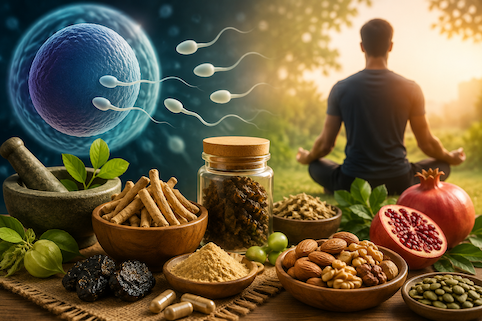

Struggling to Conceive? How Ayurveda May Support Fertility Naturally
Quick answer: Can Ayurveda help you conceive? Ayurveda supports fertility in men and women by improving hormonal balance, digestion, sleep, and stress, and by using personalised herbs such as Shatavari and Ashwagandha under guidance. It works best as complementary care alongside medical fertility treatment, not as a replacement, and is usually followed for at least three months.
Ayurveda for fertility focuses on improving reproductive health naturally through diet, lifestyle, stress management, and personalised herbal support. This guide explains how Ayurveda approaches infertility in both men and women and how it may support hormonal balance and conception naturally.
Infertility is no longer a rare concern. Today, many couples in their late 20s and 30s silently struggle with delayed conception, hormonal imbalance, stress, irregular cycles, poor sperm quality, PCOS, thyroid dysfunction, or unexplained infertility. While modern fertility treatments like IVF and IUI have advanced significantly, many couples are now turning toward integrative and holistic systems such as Ayurveda for additional support.
Ayurveda does not focus only on conception. It focuses on creating a healthy body, balanced hormones, strong reproductive tissues, calm mental health, and optimal digestion — all of which are essential for conception and a healthy pregnancy.
“Conception is not just about the reproductive organs. It is about the harmony of the entire body and mind.”
At My Ayur, we support fertility wellness through personalised Ayurvedic diet plans, lifestyle guidance, and yoga sessions designed to improve hormonal balance, reduce stress, and prepare the body naturally for conception.
How Does Ayurveda Understand Infertility?
In Ayurveda, infertility is called Vandhyatva. Classical Ayurvedic texts describe fertility as dependent on four major factors:
- Ritu — proper timing and ovulation
- Kshetra — healthy uterus and reproductive organs
- Ambu — proper nutrition and hormonal nourishment
- Beeja — healthy sperm and ovum
If any one of these factors is disturbed, conception may become difficult. Ayurveda also emphasises the role of poor digestion (Mandagni), toxin accumulation (Ama), stress and anxiety, sleep disturbances, improper lifestyle, hormonal imbalance, and excessive Vata aggravation. Modern research increasingly explores the relationship between stress, inflammation, metabolic health, and reproductive outcomes.
Why Are Fertility Problems Increasing Today?
Common causes seen in women include PCOS, irregular ovulation, endometriosis, thyroid imbalance, poor egg quality, stress-induced hormonal imbalance, low AMH, and an unhealthy lifestyle.
Common causes seen in men include low sperm count, poor sperm motility, oxidative stress, smoking and alcohol, poor sleep, obesity, and stress and anxiety.
According to recent reviews, infertility affects nearly 10–15% of couples globally.
How Does Ayurveda Support Fertility Naturally?
Ayurveda follows a personalised approach rather than a one-size-fits-all method for reproductive wellness.
1. Balancing hormones naturally
Ayurvedic herbs and lifestyle approaches are traditionally used to support hormonal balance and reproductive wellness. Commonly used herbs include:
| For female fertility | For male fertility |
|---|---|
| Shatavari | Ashwagandha |
| Ashwagandha | Gokshura |
| Lodhra | Kapikacchu |
| Guduchi | Safed Musli |
Scientific reviews suggest Ashwagandha may help improve sperm quality, stress resilience, hormonal balance, and antioxidant activity. Shatavari has traditionally been used as a female reproductive tonic and is believed to support hormonal balance and reproductive nourishment.
2. Reducing stress and cortisol
One of the most ignored fertility factors is chronic stress. High stress levels can disturb ovulation, affect sperm production, increase inflammation, impact implantation, and disrupt hormonal signalling.
Ayurveda has always recognised the mind-body connection in conception, emphasising calmness and emotional balance as essential for fertility. Recommended practices include yoga, meditation, pranayama, Abhyanga (oil massage), proper sleep, and nervous-system-calming routines.
3. Improving digestion and nutrient absorption
Ayurveda believes weak digestion leads to toxin accumulation (Ama), which may interfere with reproductive health. Fertility-supportive foods often include warm freshly cooked meals, ghee in moderation, milk with fertility herbs (when suitable), soaked nuts and seeds, seasonal fruits, and iron- and protein-rich foods. Foods commonly reduced include excess processed foods, refined sugar, excess caffeine, smoking and alcohol, and cold or packaged foods.
For day-by-day guidance, see our male fertility diet plan, or get a personalised plan in the MyAyur app.
4. Detoxification before conception
Ayurveda often recommends cleansing therapies before conception in selected patients, which may include Panchakarma, Virechana, Basti therapies, and gentle detox protocols. The aim is to support overall wellbeing, tissue nourishment, metabolic balance, and reproductive health. Recent integrative reviews discuss the role of Ayurvedic detoxification and rejuvenation therapies in infertility management, though larger clinical studies are still needed.
Can Ayurveda Help Alongside IVF?
Yes — many couples now use Ayurveda as supportive care alongside fertility treatments. Ayurveda may help by reducing stress, improving sleep, supporting overall reproductive health and wellbeing, improving metabolic health, and supporting emotional wellbeing during IVF.
Final Thoughts
Fertility is influenced by hormones, stress levels, metabolism, sleep, nutrition, and overall health. Ayurveda approaches fertility through a whole-body perspective that focuses on restoring balance and supporting reproductive wellness naturally. When combined with proper medical care and healthy lifestyle practices, Ayurvedic support may help improve overall fertility health and wellbeing.
For couples trying to conceive, My Ayur offers customised fertility-focused diet plans and guided yoga sessions that support reproductive health, stress management, digestion, and overall wellbeing.
Get Personalised Fertility Plan Download My Ayur App
Frequently Asked Questions (FAQs)
1. Can Ayurveda help with infertility?
Yes. Ayurveda supports fertility by addressing root causes — improving hormonal balance, stress levels, digestion, and overall reproductive health naturally. It is best used as a complementary approach alongside, not as a replacement for, medical fertility care.
2. Which Ayurvedic herb is best for female fertility?
Shatavari is one of the most commonly used Ayurvedic herbs for female reproductive wellness, traditionally valued as a uterine and hormonal tonic. Its suitability depends on your individual health and constitution, so professional guidance is recommended.
3. Is Ashwagandha good for male fertility?
Yes. Ashwagandha is one of the most researched Ayurvedic herbs for male fertility and may support sperm quality, testosterone balance, and stress management. It should be taken under qualified guidance, as the right dose and form depend on the individual.
4. Can Ayurveda help with PCOS-related infertility?
Ayurveda may support PCOS management through diet, lifestyle correction, stress reduction, and hormone-supporting herbs. It works best combined with appropriate medical evaluation and care rather than on its own.
5. Does stress affect fertility?
Yes. Chronic stress can disturb ovulation, hormonal balance, and sperm production. Managing stress through sleep, movement, mindfulness, and a supportive lifestyle may help reproductive wellness in both men and women.
Scientific References
- Durg S, Shivaram SB, Bavage S. Withania somnifera (Indian ginseng) in male infertility: an evidence-based systematic review and meta-analysis. Phytomedicine. 2018.
- Nasimi Doost Azgomi R, et al. Effects of Withania somnifera on reproductive system: a systematic review of the available evidence. BioMed Research International. 2018.
- Oyovwi MO, et al. Shatavari (Asparagus racemosus): a promising ally for fertility. Current Nutrition Reports. 2025.
- Pandey AK, et al. Impact of stress on female reproductive health disorders: possible beneficial effects of shatavari (Asparagus racemosus). Biomedicine & Pharmacotherapy. 2018.
- Gaskins AJ, Chavarro JE. Diet and fertility: a review. American Journal of Obstetrics and Gynecology. 2018.
- Agarwal A, Gupta S, Sharma RK. Role of oxidative stress in female reproduction. Reproductive Biology and Endocrinology. 2005.
This article is for educational purposes only and should not replace professional medical advice, diagnosis, or fertility treatment. Always consult a qualified practitioner before starting any herb, especially while trying to conceive, pregnant, breastfeeding, or undergoing fertility treatment.