
How to Improve Egg Quality Naturally with Ayurveda
Quick answer: Can you improve egg quality naturally? Egg reserve declines with age, but research suggests diet, sleep, stress management, and lowering oxidative stress can support egg quality and ovulation. Because eggs take about 90 days to mature, Ayurvedic and lifestyle changes are usually followed for at least three months, alongside medical care where needed.
Egg quality plays an important role in female fertility, conception, and reproductive health. Many women today are exploring natural ways to support fertility through diet, stress management, lifestyle changes, and Ayurveda. This guide explains how Ayurveda approaches egg quality naturally using nutrition, herbs, and holistic wellness practices.
Infertility is becoming increasingly common, especially due to stress, poor sleep, hormonal imbalance, delayed pregnancy, unhealthy eating habits, and environmental toxins. One of the major factors affecting conception is poor egg quality.
In Ayurveda, fertility is not viewed as a single reproductive issue. It reflects the overall health of the body, mind, digestion, hormones, and reproductive tissues. Healthy ovulation and reproductive wellness are believed to depend on proper nourishment of the Artava Dhatu (female reproductive tissue), balanced doshas, healthy digestion (Agni), and strong vitality (Ojas). The good news is that egg quality can often be supported naturally through proper diet, lifestyle correction, stress management, and Ayurvedic therapies.
What Does “Egg Quality” Mean?
Egg quality refers to the health and genetic integrity of a woman’s eggs. Good-quality eggs are more likely to fertilise successfully, implant properly, and develop into a healthy pregnancy. Poor egg quality may contribute to difficulty conceiving, recurrent miscarriages, failed IVF cycles, and chromosomal abnormalities.
Age is one important factor, but lifestyle, inflammation, oxidative stress, and hormonal imbalance also significantly affect egg health.
How Does Ayurveda Understand Female Fertility?
According to Ayurveda, healthy conception depends on four important factors: healthy reproductive tissue (Beeja), proper nourishment, balanced hormones, and calm mental health. The female reproductive system is governed mainly by the three doshas:
- Vata Dosha — regulates ovulation and movement
- Pitta Dosha — controls hormonal metabolism
- Kapha Dosha — nourishes reproductive tissues
When these become imbalanced, fertility may decline. Ayurveda also explains that weak digestion (Mandagni) and toxin accumulation (Ama) can interfere with hormonal balance and egg nourishment.
What Causes Poor Egg Quality?
Modern research links poor egg quality to several factors:
- Oxidative stress
- Chronic inflammation
- PCOS and endometriosis
- Poor mitochondrial function
- Smoking and alcohol
- Nutritional deficiencies
- Stress and lack of sleep
Research suggests oxidative stress may negatively affect cellular health and reproductive function, which is why antioxidants and anti-inflammatory approaches matter for egg health.
How Can You Improve Egg Quality Naturally with Ayurveda?
1. Improve digestion and metabolism
Ayurveda believes healthy tissues form only when digestion is strong. To support digestion, eat freshly cooked warm food, avoid excessive processed foods, reduce cold and refrigerated foods, and use digestive spices like cumin, ginger, fennel, and coriander. A healthy digestive system improves nutrient absorption and supports hormone production.
2. Follow a fertility-supportive diet
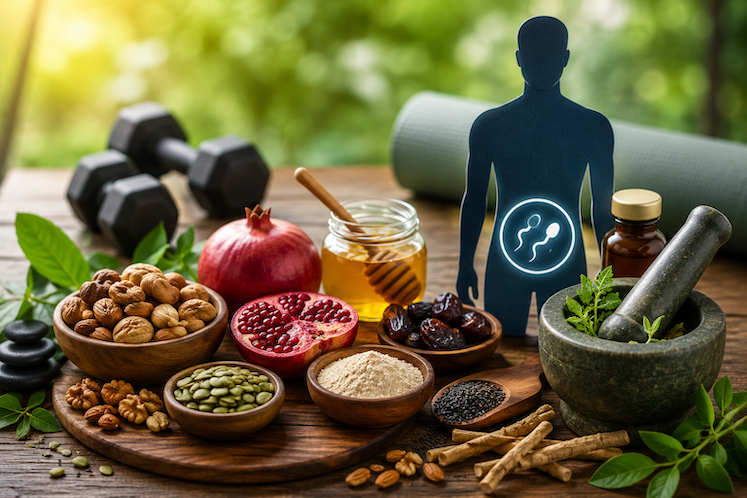
A nourishing fertility diet should include antioxidant-rich and hormone-supportive foods. Research on diet and fertility supports the role of whole foods, healthy fats, and key micronutrients in reproductive health.
| Food | Why it helps |
|---|---|
| Cow ghee (in moderation) | Healthy fats and tissue nourishment |
| Soaked almonds & walnuts | Vitamin E, omega-3s, antioxidants |
| Black sesame seeds | Minerals and traditional reproductive nourishment |
| Dates & figs | Natural energy and minerals |
| Pomegranate | Antioxidants for reproductive health |
| Fresh seasonal fruits | Broad antioxidant and vitamin support |
| Green leafy vegetables | Folate and antioxidants |
| Moong dal | Easy-to-digest protein |
| Homemade buttermilk | Supports digestion and gut health |
| Milk with turmeric or saffron | Nourishing and anti-inflammatory |
| Pumpkin seeds & flaxseeds | Zinc and omega-3s |
Personalised diet plan & food guidance for fertility
Not sure which foods are right for your body type and hormonal needs? My Ayur provides personalised diet plans based on your Ayurvedic constitution (Prakriti), hormonal profile, and fertility goals.
- Understand your dosha (Vata / Pitta / Kapha)
- Get a custom fertility-focused diet plan
- Receive food recommendations to balance your hormones naturally
- Track your nutrition progress with expert guidance
3. Ayurvedic herbs traditionally used for female fertility
| Herb | Traditionally used to support |
|---|---|
| Shatavari | Hormonal balance, reproductive tissue nourishment |
| Ashwagandha | Stress and cortisol, endocrine balance |
| Guduchi | Anti-inflammatory and immune support, oxidative stress |
| Kumari (Aloe vera) | Menstrual health and hormonal balance |
Shatavari is one of the most respected Ayurvedic herbs for female reproductive health, traditionally used to support hormonal balance, nourish reproductive tissues, and improve vitality; research suggests it has antioxidant and phytoestrogenic properties. Ashwagandha helps reduce stress and cortisol, and studies suggest it may support stress resilience and endocrine balance. Guduchi is valued for anti-inflammatory and immune support, and Kumari (Aloe vera) is traditionally used for menstrual health and hormonal balance.
4. Yoga practices traditionally recommended
Gentle yoga practices often recommended for reproductive wellness include Baddha Konasana, Viparita Karani, Bhujangasana, and Setu Bandhasana. Always practise under proper guidance if you have PCOS, endometriosis, or a fertility-treatment history.
Can Egg Quality Really Improve Naturally?
Egg reserve naturally declines with age, but research shows lifestyle and nutritional support can positively influence mitochondrial health, oxidative stress, and reproductive wellness. Ayurveda does not promise instant conception; instead, it focuses on improving the body’s internal environment to support healthy fertility naturally.
Consistency is important. Most fertility-focused Ayurvedic approaches are followed for at least three months, because egg maturation takes approximately 90 days.
Final Thoughts
Fertility is deeply connected to overall health. Ayurveda approaches it by strengthening the body from within rather than focusing only on symptoms. A balanced diet, healthy digestion, stress management, proper sleep, and individualised Ayurvedic care may help support egg quality naturally and improve reproductive wellness over time.
To go deeper on one of the most-used fertility herbs, read our guide on Shatavari for female fertility, or check your dominant dosha (body type) to personalise your approach.
Get your personalised Ayurvedic plan Check the MyAyur app
Frequently Asked Questions (FAQs)
1. Can Ayurveda help improve egg quality?
Ayurveda may support reproductive wellness through diet, herbs, stress management, detoxification practices, and lifestyle correction. However, egg quality is influenced by age, hormones, medical history, and overall health, so professional medical guidance is recommended.
2. Which herb is best for female fertility?
Shatavari is traditionally considered one of the most commonly used Ayurvedic herbs for female reproductive health. Its suitability depends on the individual’s body type, health condition, and fertility history, so it should be used under qualified guidance.
3. How long does it take to improve egg quality naturally?
Egg maturation takes around 90 days, so lifestyle and nutrition changes take about three months or longer to show meaningful effects. Results can vary depending on age, hormonal balance, and underlying health conditions.
4. Can PCOS affect egg quality?
Yes, PCOS can affect ovulation, hormonal balance, and reproductive health, which may influence egg quality in some women. Managing PCOS through diet, lifestyle, medical care, and stress reduction may support fertility outcomes.
5. Which foods help support egg quality?
Foods such as pomegranate, soaked nuts, seeds, ghee in moderation, leafy vegetables, whole grains, and antioxidant-rich foods may support reproductive health as part of a balanced diet. Warm, freshly cooked meals are preferred in Ayurveda for easier digestion and better nourishment.
6. Can stress really affect egg quality, and what does Ayurveda recommend for it?
Chronic stress may affect hormones, ovulation, sleep, and overall reproductive wellness. Ayurveda commonly recommends stress-supporting practices such as pranayama, Abhyanga, calming routines, early sleep, and suitable herbs like Ashwagandha under professional guidance.
Scientific References
- Gaskins AJ, Chavarro JE. Diet and fertility: a review. American Journal of Obstetrics and Gynecology, 2018.
- Agarwal A, Gupta S, Sharma RK. Role of oxidative stress in female reproduction. Reproductive Biology and Endocrinology, 2005.
- Tiwari P. Ayurvedic concepts related to female infertility. AYU Journal, 2014.
- Mishra LC, Singh BB, Dagenais S. Scientific basis for the therapeutic use of Withania somnifera (ashwagandha): a review. Alternative Medicine Review, 2000.
- Alok S, et al. Plant profile, phytochemistry and pharmacology of Asparagus racemosus (Shatavari): a review. Asian Pacific Journal of Tropical Disease, 2013.
- World Health Organization. Infertility fact sheet.
This article is for educational purposes only and should not replace professional medical advice, diagnosis, or fertility treatment. Always consult a qualified practitioner before starting any herb, especially while trying to conceive, pregnant, or breastfeeding.