Quinoa Khichdi: 5 Reasons Nutritionists Love It
Quick answer: Can quinoa khichdi help with weight loss? Yes. Quinoa is a complete plant protein with slow-release carbohydrates and more fibre than rice. This combination supports appetite control, stable blood sugar, and a healthy gut. When made with dal, vegetables, and minimal oil, khichdi becomes one of the most nutritious and satisfying weight-management meals in Indian cooking.
What if your comfort food could also help you lose weight?
Most people assume that eating for weight loss means giving up familiar meals and switching to complicated diet foods. In practice, the most effective approach is often much simpler: take a classic dish and make it more nutritious. Quinoa khichdi does exactly that. It is a modern take on a traditional Indian comfort meal that fits naturally into any healthy weight-loss diet.
Khichdi has long been valued in Ayurveda as a light, easy-to-digest, and deeply nourishing meal. When rice is replaced with quinoa, this simple dish becomes richer in protein and fibre, supports metabolism, and keeps you satisfied for longer. Nutrition science backs this up: quinoa contains complete protein, slow-release carbohydrates, and essential minerals that help the body manage weight without feeling deprived.
Here are five reasons why quinoa khichdi is gaining attention from nutritionists, doctors, and health-conscious cooks.
1. Does Quinoa Khichdi Help Control Cravings?
Yes, and this is one of its biggest advantages. Frequent hunger is one of the hardest parts of managing weight, and protein is the macronutrient that addresses it most directly.
Quinoa is a complete protein, meaning it contains all nine essential amino acids. One cup of cooked quinoa provides approximately 8 grams of protein, which helps reduce cravings between meals, preserve muscle mass during weight loss, and support a healthy metabolic rate.
When quinoa is combined with lentils in khichdi, the protein quality improves further, making it one of the most complete vegetarian protein meals you can prepare. This combination is especially valuable for people who follow a plant-based diet and need reliable protein at each meal.
2. How Does Quinoa Khichdi Support Gut Health?
Quinoa contains 2 to 3 times more fibre than white rice. Fibre plays a central role in weight management because it slows digestion, prevents sudden blood sugar surges, keeps the stomach fuller for longer, and supports a balanced gut microbiome.
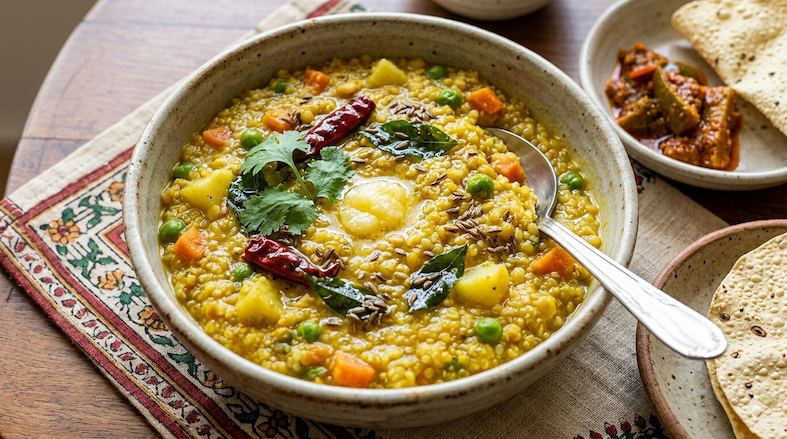
Adding vegetables like carrots, beans, spinach, or bottle gourd to quinoa khichdi increases the fibre content even more, turning a simple bowl into a genuinely gut-friendly meal. In Ayurveda, this kind of light, spiced, vegetable-rich food is considered ideal for building digestive fire (Agni) without creating heaviness or toxins (Ama).
3. Is Quinoa Khichdi Good for Diabetes and Weight Loss?
Foods with a high glycaemic index cause rapid blood sugar spikes, which can trigger fat storage and increased hunger shortly after eating. Quinoa has a medium to low glycaemic index, which means energy is released gradually. This makes quinoa khichdi a practical choice for people managing weight or blood sugar levels.
The steady energy release also means fewer cravings for sugary or high-calorie snacks between meals, which is one of the most common obstacles to sustainable weight loss.
4. Which Nutrients in Quinoa Support Metabolism?
Compared to refined grains, quinoa is significantly richer in micronutrients that directly support metabolic health:
| Nutrient | Role in the body |
|---|---|
| Magnesium | Supports energy metabolism and muscle function |
| Iron | Helps carry oxygen to cells and supports energy levels |
| B vitamins | Help convert food into usable energy |
| Antioxidants | Reduce inflammation that can slow metabolism |
These nutrients help the body stay active and balanced even on a calorie-controlled diet, which is where many conventional weight-loss plans fall short.
5. Is Quinoa Khichdi Easy to Digest?
In Ayurveda, traditional khichdi is considered one of the most gut-friendly meals because it is warm, lightly spiced, and easy on the digestive system. Quinoa khichdi carries the same qualities. It digests easily while still providing rich nutrition, making it a good choice for people with slow metabolism, bloating, or digestive sensitivities who still need a substantial meal.
This balance of being both nourishing and gentle is one of the reasons khichdi has been a staple of Ayurvedic healing diets for centuries.
How Should You Eat Quinoa Khichdi for Weight Loss?
- Portion size: One bowl, using about 50 g of raw quinoa per meal
- Load up on vegetables: Bottle gourd, spinach, beans, zucchini, or carrot add fibre and volume without many calories
- Keep fat minimal: One teaspoon of cold-pressed oil or ghee is enough
- Best timing: Lunch or early dinner, when digestion is strongest
- Healthy sides: Serve with buttermilk, cucumber salad, or lightly cooked vegetables rather than fried accompaniments
Final Thoughts
Quinoa khichdi is a genuinely smart meal for anyone working on their weight. It bridges traditional Indian comfort food and modern nutritional science in a way that is practical, affordable, and satisfying.
That said, no single food drives weight loss on its own. Your body type, digestion, activity level, and overall lifestyle all matter. A meal plan built around your specific dosha and health goals will always work better than a generic approach. You can explore your Prakriti (body type) with the free dosha quiz on the MyAyur app and get personalised diet guidance based on your results.
For more Ayurvedic meal ideas that support energy and digestion, see our guide to the best Ayurvedic breakfast recipes.
Get Personalised Weight-Loss Diet Plan Yoga for Weight Loss
Frequently Asked Questions (FAQs)
1. Which is healthier, quinoa or rice in khichdi?
Quinoa khichdi is generally more nutritious than white rice khichdi because quinoa contains more protein and fibre and tends to have a lower glycaemic impact. This helps maintain steadier energy levels and better appetite control throughout the day. For most people, quinoa khichdi also keeps you feeling full noticeably longer than the rice version.
2. What is the best time to eat quinoa khichdi for weight loss?
Lunch or early dinner tends to work best, because digestion is naturally strongest in the middle of the day and eating earlier in the evening gives your body enough time to process the meal before sleep. Quinoa khichdi is nutritious, filling, and easy to digest when prepared with vegetables and minimal oil. Ayurveda also recommends the largest meal at midday, which aligns well with having khichdi for lunch.
3. Can people with diabetes eat quinoa khichdi?
Yes, quinoa khichdi can generally be included in a diabetes-friendly diet in moderate portions, particularly when it is made with vegetables, dal, and very little oil. Quinoa's lower glycaemic index compared to white rice means a more gradual rise in blood sugar after eating. Since individual responses vary, it is still worth monitoring your levels and getting guidance from a doctor or registered dietitian.
4. Can quinoa khichdi be eaten daily for weight loss?
Yes, it can be eaten regularly as part of a balanced diet, though varying your meals overall is always a good idea. For weight loss, the total meal plan, portion sizes, activity level, and consistency matter more than any individual food choice. Keeping one serving to about one bowl (50 g raw quinoa) is a practical starting point.
5. Is quinoa khichdi better than dal rice for weight loss?
Quinoa khichdi generally provides more protein and fibre per serving than regular dal rice, which supports better satiety and appetite control throughout the day. That said, both can be part of a healthy, weight-conscious diet when portion sizes are managed well. If you currently eat dal rice regularly, swapping it for quinoa khichdi a few times a week is a simple and enjoyable way to improve the nutritional quality of your meals.
Scientific References
- Vega-Gálvez A, et al. Nutrition facts and functional potential of quinoa (Chenopodium quinoa Willd.), an ancient Andean grain: a review. Journal of the Science of Food and Agriculture. 2010;90(15):2541–2547.
- De Carvalho FG, et al. Quinoa intake improves lipid profile and glycaemic response in overweight subjects. Plant Foods for Human Nutrition. 2014.
This article is for general educational and nutritional information only. It is not a substitute for personalised dietary advice. Always consult a qualified healthcare professional or registered dietitian before making significant changes to your diet, especially if you have diabetes, thyroid conditions, or other health concerns.