
Male Fertility Diet Plan: Foods That Naturally Boost Sperm Health
Quick answer: What is the best male fertility diet plan? Eat antioxidant- and zinc-rich whole foods — pumpkin seeds, walnuts, amla, pomegranate, leafy greens, moong dal, and whole grains — in warm, freshly cooked meals, and limit alcohol, smoking, processed food, and excess sugar. Because sperm take about 70 to 90 days to form, give consistent changes around three months before expecting results.
What you eat every day has a direct effect on sperm health. Sperm cells are highly sensitive to oxidative stress, and the right foods supply the antioxidants, vitamins, and minerals that help protect them. If you are searching for a male fertility diet plan, this guide gives you the foods to focus on, the foods to limit, and a simple sample day you can start with.
From an Ayurvedic view, fertility is tied to a healthy Shukra Dhatu, the reproductive tissue linked to vitality and reproduction. Ayurveda holds that when digestion, nutrition, sleep, and mental balance are in order, reproductive health tends to improve naturally. Modern research points the same way: diet and lifestyle meaningfully influence semen quality.
If low sperm count is your main concern, we cover the causes and natural management in more depth in our guide on low sperm count and Ayurveda.
How Does Diet Affect Male Fertility?
Sperm take roughly 70 to 90 days to develop. That means the foods you eat over the next three months shape the quality of the sperm you will produce. Two things matter most:
- Antioxidants protect sperm from oxidative damage and may support motility and shape.
- Key micronutrients (zinc, selenium, omega-3s, folate, CoQ10) are the raw materials for healthy sperm and balanced testosterone.
Research suggests antioxidants such as CoQ10, zinc, selenium, and carnitine may improve sperm concentration, motility, and overall semen quality in subfertile men.
What Foods Boost Male Fertility?
These fertility-boosting foods are easy to add to everyday Indian and Western meals.
| Food | What it helps with |
|---|---|
| Pumpkin seeds | Zinc for testosterone and sperm formation |
| Walnuts & almonds | Omega-3s and vitamin E for sperm membrane health |
| Amla | Vitamin C, a strong antioxidant |
| Dates & figs | Natural energy and minerals |
| Pomegranate | Antioxidants linked to sperm quality |
| Black sesame seeds | Traditional Ayurvedic Shukra-nourishing food |
| Moong dal & whole grains | Protein and steady nutrition |
| Cow ghee (in moderation) | Healthy fats and tissue nourishment |
| Fresh fruits & vegetables | Broad antioxidant and vitamin support |
Key nutrients to prioritise
| Nutrient | Why it matters | Where to get it |
|---|---|---|
| Zinc | Testosterone and sperm formation | Pumpkin seeds, lentils, nuts |
| Selenium | Sperm motility | Brazil nuts, eggs, whole grains |
| Vitamin C & E | Reduce oxidative stress | Amla, citrus, almonds |
| Omega-3 | Sperm membrane health | Walnuts, flax, fish |
| CoQ10 | Sperm energy and motility | Whole grains, nuts, organ-rich diets |
| Folate & B12 | Healthy sperm DNA | Leafy greens, dairy, legumes |
Ayurveda also recommends warm, freshly cooked meals over cold or processed food, to support digestion and proper nourishment of reproductive tissue.
What Foods Should Men Limit or Avoid?
| Limit or avoid | Why |
|---|---|
| Excess alcohol | Lowers testosterone, affects liver and sperm |
| Smoking & tobacco | Damages sperm DNA and reduces count |
| Heavily processed & junk food | Promotes inflammation and weak digestion |
| Excess sugar | Linked to poorer metabolic and hormonal health |
| Very heavy late-night meals | Disrupt sleep and digestion (Agni) |
Sample Ayurvedic Fertility Diet Plan for Men
A simple, warm, easy-to-digest day to start with. Keep meals regular, eat your largest meal at midday, and stay well hydrated with warm water.
| Meal | What to eat |
|---|---|
| Breakfast | Warm oats or porridge with soaked almonds, dates, pumpkin seeds, and a small amount of ghee |
| Lunch | Moong dal or lentils with rice or millet, cooked vegetables, salad, and a spoon of ghee |
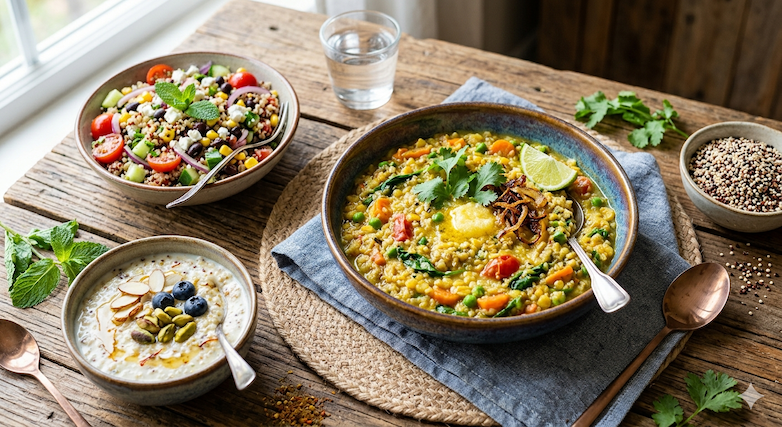
| Dinner | A light, warm meal such as khichdi, vegetable soup, or dal with rice |
| Before bed | Warm milk with suitable Ayurvedic herbs, only under expert guidance |
Through the week: rotate your grains (rice, millet, whole wheat), vary your vegetables for a wider antioxidant range, and include a daily source of seeds or nuts. Consistency over three months matters more than any single “superfood.”
Get your personalised Ayurvedic fertility diet plan in the MyAyur app
Beyond Diet: Habits That Support Fertility
Diet works best alongside a few supporting habits.
- Sleep: Aim to sleep before 10:30 PM. Regularly sleeping under 6 hours can lower testosterone and sperm quality.
- Stress: Chronic stress lowers testosterone. Meditation, yoga, pranayama, and Abhyanga (oil massage) help.
- Movement: Walking, yoga, Surya Namaskar, and moderate strength training support circulation and hormones. Avoid overtraining.
- Heat: Limit hot tubs, laptops on the lap, and very tight underwear, as excess heat around the testes may reduce sperm production.
- Digestion (Agni): Eat on time, avoid overeating, and use cumin, coriander, fennel, and ginger. Weak digestion leads to Ama (toxins) that can affect all tissues.
Ayurvedic herbs (under medical supervision)
Certain herbs are traditionally used as Vrishya Rasayanas (reproductive rejuvenators): Ashwagandha, Shatavari, Gokshura, and Kapikacchu (Mucuna). Research suggests Ashwagandha may positively influence semen parameters and stress in infertile men. Always take Ayurvedic medicines under qualified guidance.
When Should You See a Doctor?
Diet helps many men, but some causes need medical evaluation. Seek professional help if:
- You have been trying to conceive for over 12 months
- You have a known low sperm count or low motility
- Erectile dysfunction is present
- There is a history of varicocele, diabetes, or hormonal issues
A semen analysis and hormonal evaluation can identify the underlying issue early. Learn more in our low sperm count guide.
Get a Personalised Fertility Diet Plan
This guide is a starting point. Your dosha, digestion, and goals are unique, and a plan built around them works better than a generic list. In the MyAyur app, you can explore Ayurvedic diet and lifestyle guidance for male fertility, low sperm count, and reproductive wellness, all based on holistic principles.
Download the MyAyur app See MyAyur Fertility Plans
Frequently Asked Questions
1. What should a man eat to improve fertility?
Focus on antioxidant- and zinc-rich whole foods: pumpkin seeds, walnuts, almonds, amla, pomegranate, leafy greens, moong dal, and whole grains. Warm, freshly cooked meals are preferred in Ayurveda because they are easier to digest and nourish reproductive tissue. Pair this with healthy fats like ghee and a daily source of seeds or nuts.
2. What is the best diet plan to boost male fertility?
The best plan is built on whole foods, healthy fats, and antioxidants eaten on a regular schedule, and in Ayurveda it is personalised to your dosha to balance the body overall. A typical Ayurvedic day is a warm breakfast with nuts and seeds, a moong dal and rice lunch, and a light dinner such as khichdi. My Ayur offers personalised, dosha-based diet, herb, yoga, and lifestyle plans for men’s reproductive health — get a free male fertility diet plan in the app.
3. Which foods reduce sperm count or should men avoid?
Limit alcohol, smoking and tobacco, heavily processed and fried foods, and excess sugar, as these promote oxidative stress and inflammation that can harm sperm. Very heavy late-night meals also disturb sleep and digestion, which indirectly affects fertility. Cutting these back is often as important as adding fertility-friendly foods.
4. Can diet alone increase sperm count?
Diet can meaningfully support sperm count and quality, but results are strongest when combined with good sleep, stress management, exercise, and avoiding smoking and alcohol. Some causes of low sperm count, such as varicocele or hormonal problems, also need medical treatment. Think of diet as the foundation rather than the whole solution.
5. How long does it take for diet to improve sperm quality?
Sperm take about 70 to 90 days to fully form, so give consistent diet and lifestyle changes around three months before expecting a noticeable difference. A follow-up semen analysis after that period is a good way to track progress. Consistency over those months matters more than any single food.
6. Which nutrients are most important for sperm health?
Zinc, selenium, vitamin C, vitamin E, CoQ10, omega-3 fatty acids, and folate are among the most researched nutrients for male fertility. They support sperm formation, motility, and protection from oxidative stress. A varied diet of seeds, nuts, leafy greens, whole grains, and fruit usually covers most of them.
7. Can a vegetarian diet support male fertility?
Yes. Lentils, nuts, seeds, dairy, ghee, leafy greens, and fruits cover most key fertility nutrients on a vegetarian diet. Vegetarians should pay particular attention to zinc, vitamin B12, and omega-3 intake, supplementing if needed under guidance.
8. Does stress affect fertility in men?
Yes. Chronic stress raises cortisol, which can lower testosterone and reduce sperm production. Managing stress through good sleep, yoga, pranayama, and a regular routine is an important part of any male fertility plan.
9. When should a man get fertility testing done?
If pregnancy has not occurred after about 12 months of regular, unprotected intercourse, a fertility evaluation is recommended. Testing sooner is sensible if there is a known issue such as low sperm count, erectile dysfunction, varicocele, diabetes, or a hormonal problem. A semen analysis and hormonal check can identify the cause early.
References
- PubMed – CoQ10 and Semen Quality Meta-analysis
- PubMed – Antioxidants and Sperm Quality Review
- NCBI – Male Infertility Overview
- PMC – Antioxidants in Male Infertility
- ScienceDirect – Nutrients and Sperm Quality Review
Medical disclaimer: This article is for general educational purposes and is not a substitute for professional medical advice, diagnosis, or treatment. Always consult a qualified practitioner before starting any supplement, herb, or diet, especially if you have a medical condition.